.jpg.jpeg)
.jpg.jpeg)
.jpg.jpeg)
.jpg.jpeg)
by Flame to Fame Solutions
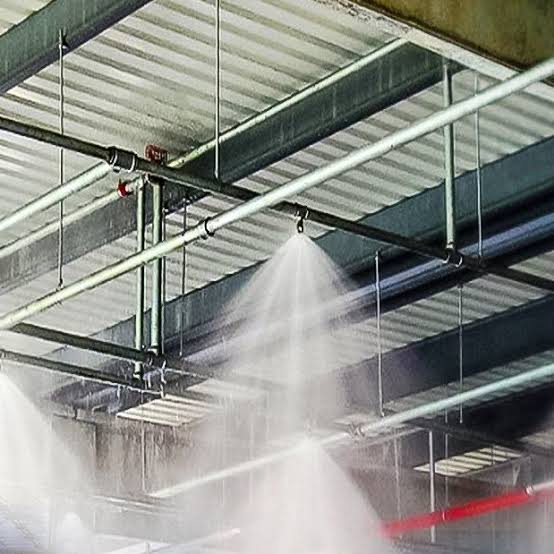
They are designed to activate when a predetermined temperature is reached, discharging a water spray that can either extinguish a fire or control its spread.
The extinguishing mechanism works by wetting combustible materials to prevent fire from spreading, as well as displacing combustible vapors and oxygen. This dual action makes sprinklers one of the most reliable fire suppression methods available.
The design of a sprinkler system is determined by the hazard classification of the building occupancy. Each classification has its own minimum design density of discharge and an assumed maximum area over which this density must be achieved.
The selection depends on the nature of the area to be protected.
Glass bulb color codes and their corresponding temperature ratings.
The thermal sensitivity of a sprinkler depends on the nominal temperature rating of its glass bulb, which typically ranges from 57°C to 260°C, identified by different color codes.
| COLOR CODE | TEMPERATURE RATING | CLASSIFICATION | TYPICAL USE |
|---|---|---|---|
| Orange | 57°C | Ordinary | Offices, Hotels |
| Red | 68°C | Ordinary | Most Common Use |
| Yellow | 79°C | Intermediate | Light Manufacturing |
| Green | 93°C | Intermediate | Warm Environments |
| Blue | 141°C | High | Industrial Areas |
| Mauve | 182°C | Extra High | Furnace Rooms |
| Black | 204°C – 260°C | Ultra High | Specialized Industrial |